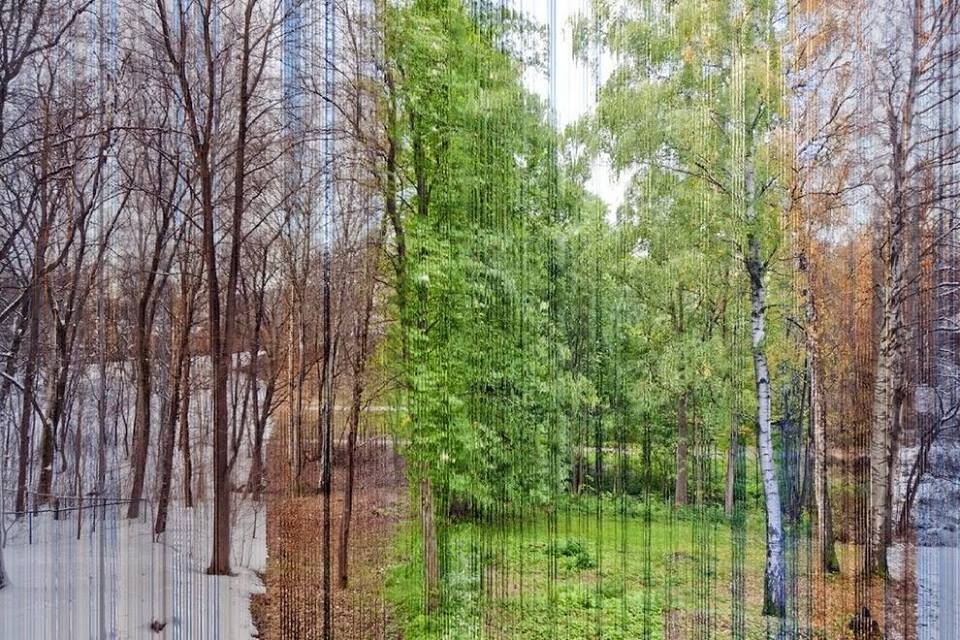
This awesome image consists of 3,888 photos taken from the same vantage point in Oslo, Norway, for a whole year.
The images are stitched together, with each photo contained in a column only a pixel wide. In terms of calendar months, January is to the left and December to the right.
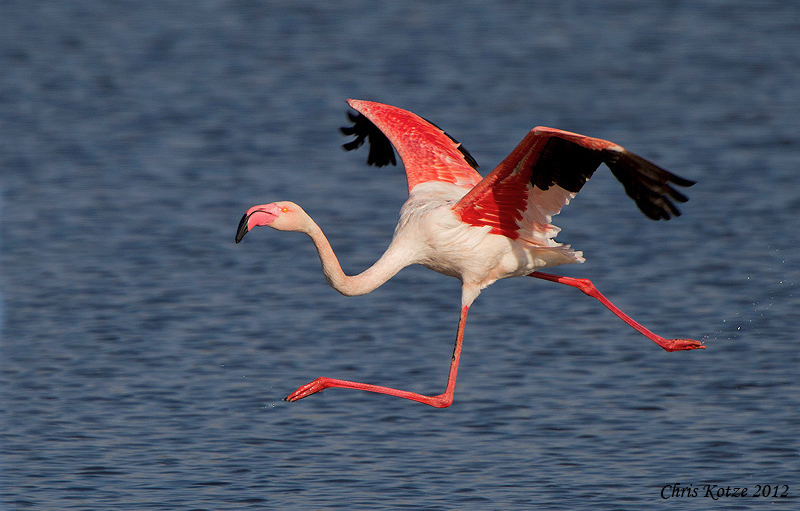
So I’m watching a Sir David Attenborough (Natural Curiousities on Netflix), to cope withe the crushing lonliness of solo housesitting, and he’s on about Really Weird animals and talks about the origins of the pheonix- a bird that people travelling though Africa only rarely saw shrouded in the streamy mists of volcanic soda lakes (which are literally boiling hot and also extremely caustic).
And all they’d see is the occasional bit of bright red plumage and see these things bobbing in and out of the horrible death clouds coming off the lake, and naturally came up with the myth of a firebird what the fuck ELSE would be living IN A GODDAMN VOLCANO??
The Central Africans told this to the Egyptians who told the Greeks* about this mysterious animal, and they ran hog-wild with it to create the now-famous Pheonix, but-
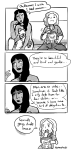
The bird they were seeing in those volcanic lakes?
*There is significant academic debate about who told who what when (esp as the firebird myth has cropped up multiple times and been culturally exchanged many, MANY times) but the Flamingo>Egyptian Bennu>Greek Pheonix>European Pheonix chain is fairly well agreed upon.
“Unsupervised” often refers to a type of machine learning. With “supervised” machine learning you get a training data set that has the correct answers attached– so the program can check (or supervise) its own accuracy.
In my experience, unsupervised algorithms are often used for clustering (grouping items into categories which are not predefined). I have no fucking idea how an unsupervised algorithm gets this fucking good at this.
…. but there is a link to a research paper about how they made this and now I have to read it because I’m curious.
Basically the researchers preprogrammed a lot of assumptions about the shapes of pebbles, and this isnt very generalizable.
This likely wouldnt even work for a picture which had some scattered pebbles on a flat surface with the flat surface visible, but I’m super super curious how this algorithm would interpret pictures like that as well as non-pebble pictures in general.






 mostllynature